A message from them
Kids choose a short message or write their own, then send it to family or an approved friend.
 Log in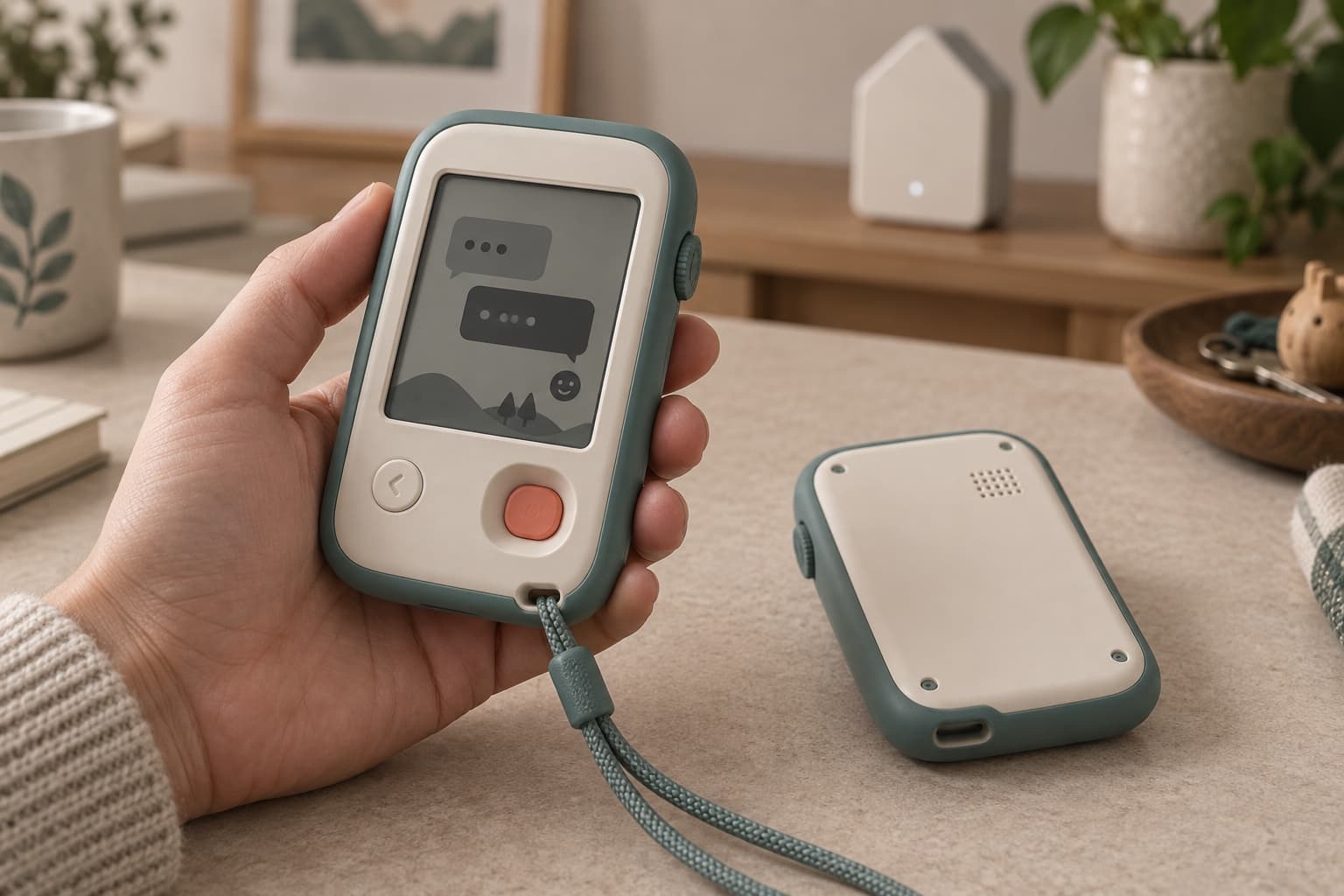
For the places just beyond home
More independence, before a phone. A purpose-built way for kids to message home and approved friends.
Explore the experienceKids ask for more trust, more freedom, and often a phone or smartwatch. We are building a way to stay in touch while families take their time with that next step.
Their destination. A little reassurance for you.
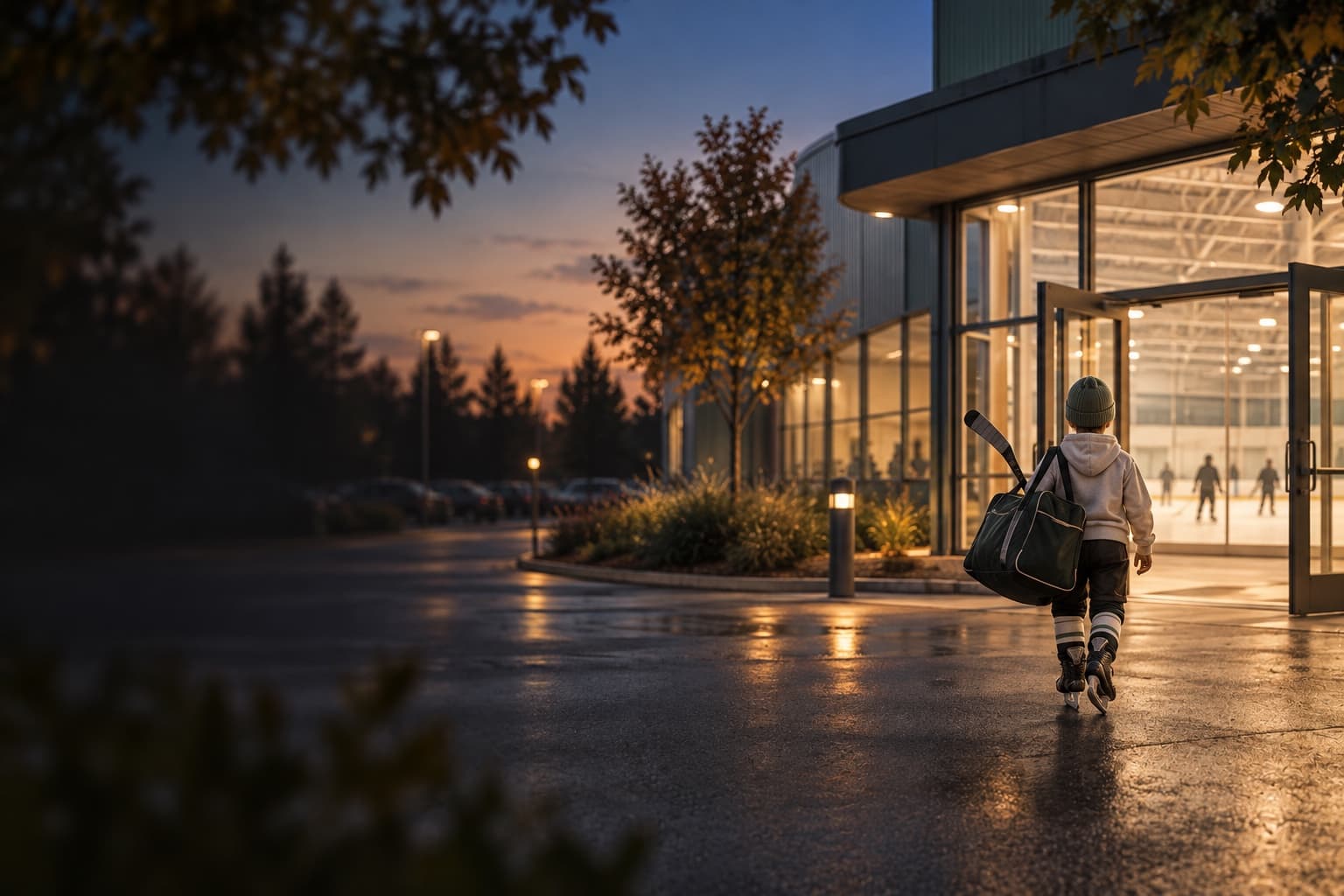
At school, at hockey, or at a friend’s house. Your family chooses the check-in places. Your child chooses the one they’ve reached and sends an update home.
Where did they arrive?
An arrival check-in
A little update from their day.
Interactive illustration. A check-in is the child’s report, not a GPS fix or confirmation of safety. Actual delivery requires the intended app’s receipt.
The everyday adventure
A quick arrival message, even when you’re somewhere else.
Illustrative exchange and concept imagery. Connection depends on a reachable participating base and internet access.
Everyday connections
Kids choose a short message or write their own, then send it to family or an approved friend.
They can choose a place or activity their family set up. It says what they selected, not where a sensor found them.
The guardian app can send a new message or respond, and the child device keeps received messages in a simple inbox.
Designed around family life
A dedicated device for short messages to home, limited communication with approved friends, and family check-ins. Choose a message, hold to send, and read a reply. No feeds or app store competing for their attention.
We are building the phone app and web portal around your household: children, approved contacts, message choices, check-in places and home bases.
Our intended model is a hardware purchase without a required Roveside subscription or cellular plan. Your home base and guardian app use your existing internet connections.
Why I'm building Roveside
I'm a father first, and a developer second. My kids are constantly asking for more independence. They want to go a little farther, make their own plans, and show us they can handle more trust.
They're also asking for smartwatches and cell phones. As parents, we want to wait as long as we can. We're concerned about the screen time, social media, and everything else that comes with those devices.
I'm building Roveside for the years in between: from around age eight until a family feels ready for a first phone, whether that's at twelve, sixteen, or somewhere in between. A simple way to communicate with home and a small circle of approved friends, designed without a required subscription.
 B4 enclosure-inspired concept. Physical fit is not validated.
A place to come home to
A participating family base connects nearby child devices to the guardian app through the internet. We are testing compact Wi-Fi bases alongside the current computer-and-radio prototype. The house-shaped enclosure is one design direction.
See the current modelsThe idea behind the connection
A child device talks to a participating family base. The base can carry an encrypted message toward the right person, whose app or device confirms when it actually receives it.
Built on Meshtastic, an open-source LoRa mesh network. Nearby compatible nodes can help relay encrypted radio traffic. Participating family bases shape coverage; real routes, reliability and battery life still need field measurement.
Built on Meshtastic
Roveside builds on an existing open-source LoRa mesh. Nearby compatible Meshtastic nodes can pass radio packets along, even when they aren’t Roveside devices.
Well-placed, compatible nodes can fill gaps in a radio path. More participating family bases can create more places for Roveside messages to reach the internet and your account.
Placement, settings, terrain and radio traffic matter. More nodes alone don’t guarantee better reliability. Community relays help opportunistically; participating family bases and measured routes are the foundation.
Explore the community node mapLiam Cottle’s map shows nodes reported through MQTT. It is not a Roveside coverage map, and a marker does not prove a usable route. Community infrastructure and your family’s private check-in history are separate.
Compatible relays can help a message reach a participating family base.
Illustration only. Lines represent possible hops, not measured routes or guaranteed coverage.
From idea to evidence
Two child prototypes and family bases have exchanged encrypted messages with a guardian app. Children can send messages to approved friends and select family-defined check-ins. The system marks a message Delivered only after the intended app or device confirms it.
Comfortable carry, usable battery life, real-world routes, easy family setup and recovery when a device or connection fails. We will share measured evidence as this moves toward a Kickstarter campaign.
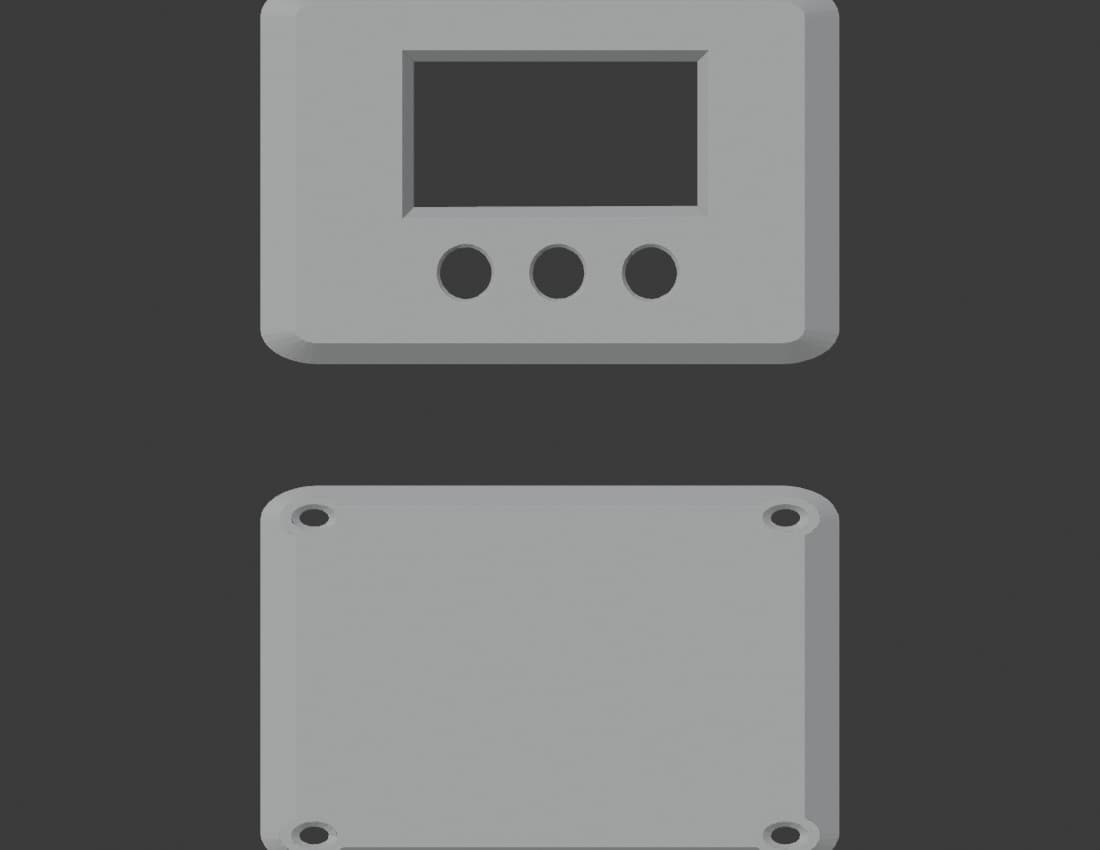
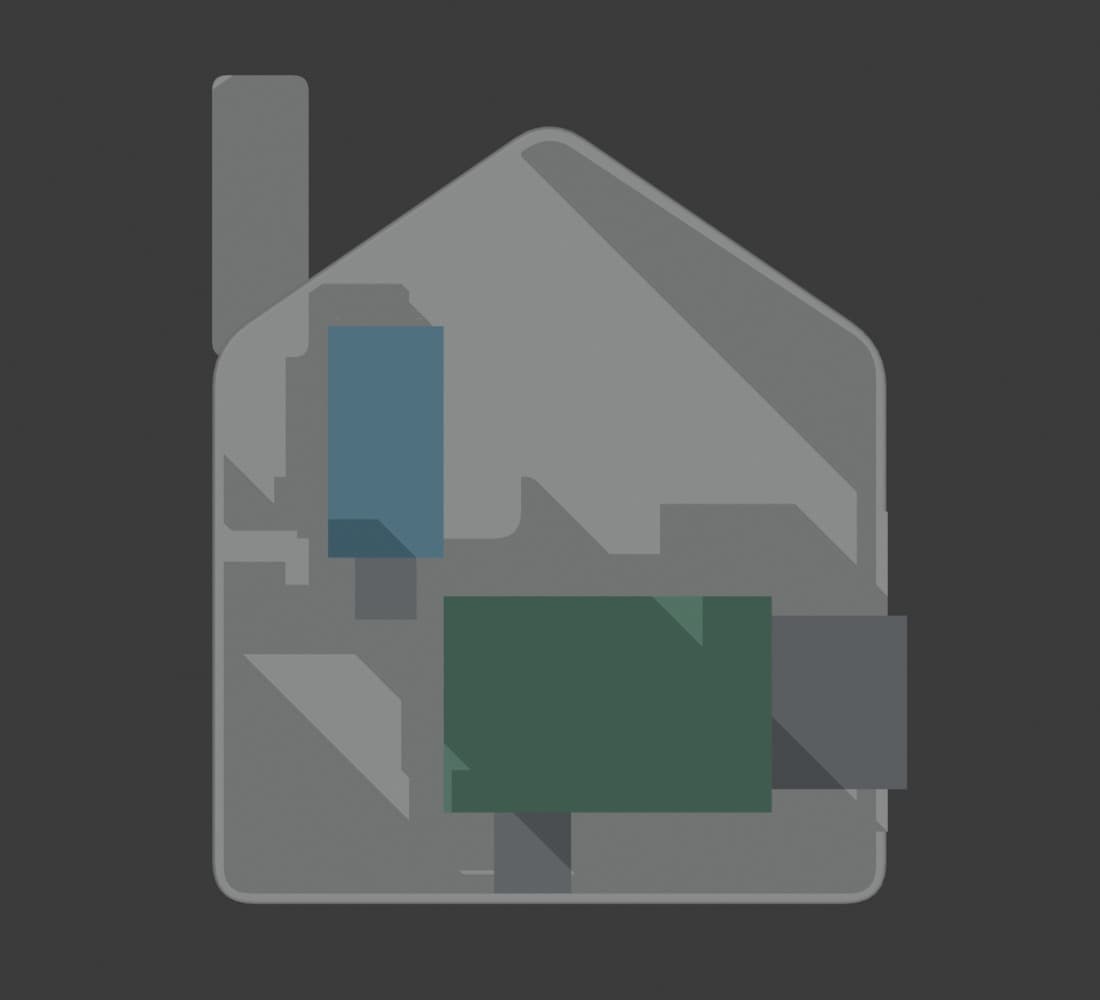
Prototype status, October 2026

I'm building Roveside to give my kids more room to grow while we take our time with a first phone. We are working toward a future Kickstarter launch; the campaign, hardware design and availability are still taking shape.
Back to the beginning